Four stick figures with empty speech bubbles

In this fun article from the New York Times*, the writer introduces us to the concept of familect (or, if you prefer, familylect) (Abebe, 2026). Yes, this post is about language, and I know that survey research tells us that only 41% of Intro Psych instructors cover language (Richmond et al., 2021), but I also have a place for this in the social psychology chapter. Stick with me! A dialect is language shared by people who live in or come from the same region. In 2013, the New York Times published a dialect quiz for people who live in the United States. I grew up in western PennsylvaniaRead More →

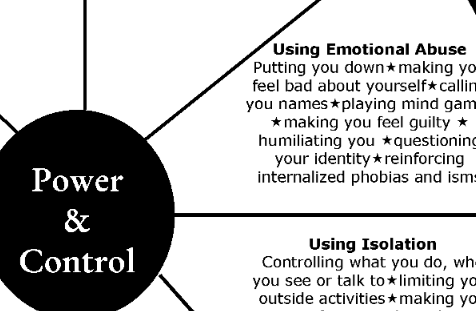
Snip from Power and Control wheel showing Using Emotional Abuse and Using Isolation

After reading this article by Washington Post advice columnist Carolyn Hax (Hax, 2026), I was shaken by the letter writer’s description of their relationship, but I was more shaken by the letter writer’s concluding paragraph. I’ll wait here while you read the question and Hax’s response. … Like Hax, I don’t believe for one minute that the boyfriend’s therapist encouraged—let alone praised (!)—him for checking the letter writer’s phone. In fact, I don’t believe he visited a therapist. After you’ve covered both relationships in the Social Psychology chapter and ethics in the psychotherapy chapter, invite your students to work in small groups to answer theRead More →

red baseball helmet on green grass field

In talking about operant conditioning, I used to give the example of a slot machine as a variable ratio schedule of reinforcement and call it a day. I was wrong. The typical description: Keep pushing the slot machine button and eventually you’ll win. That win positively reinforces button pushing. Push more buttons, get more wins.  However, many slot machine users are not pushing the button to get the win. Instead, they push buttons to enter a zone where they don’t have to think about whatever negative stuff is happening in their lives. Each button push is negatively reinforced with the continued absence of negative emotionsRead More →

cute little brothers and sister

In this New York Times op-ed piece (gifted to you), economist Catherine Ruth Pakaluk makes an interesting observation (Pakaluk, 2026). “[A]fter years of interviewing parents of large families,” she writes, “Some of what shapes a child can’t be supplied by parents at all, no matter how attentive or well resourced. It comes from siblings” (Pakaluk, 2026) Pakaluk argues, “In many large families, everybody shares a room; small disputes have to be hashed out; older children naturally take responsibility for younger ones. ‘There are tons of opportunities for them to be self-sacrificing and patient and charitable,’ said one mother, a former litigator with six children, adding,Read More →

Sue and Verla at Machu Picchu

My wife and I recently took a 2-week bucket-list trip to Peru. Yes, Machu Picchu was amazing. Getting to Machu Picchu is not easy. First, you fly from the coastal city of Lima to Cusco (altitude: 11,000 ft), then take a 2-hour bus ride to Ollantaytambo (altitude: 9,100 ft), and then take a 90-minute train to Aguas Calientes (aka Machu Picchu Pueblo; altitude: 4,500 ft). From this village, you board a public bus that takes you up the 30-minute switchback to Machu Picchu (altitude: 7,972 ft). Chewing coca leaves or drinking coca leaf tea produces a mild stimulant effect that local lore suggests helps withRead More →

HeroRATs are African giant pouched rats trained by APOPO* to save lives. Their work is so important that I feature HeroRATs in the opening of the learning chapter in my Intro Psych textbook. Some rats have been trained to find unexploded landmines. Other rats have been trained to sniff out tuberculosis in sputum samples. A comparatively new project for APOPO is training their rats to find survivors in earthquake rubble. Watch this 13-minute video to learn more about HeroRat training and how that training is being put to use in earthquake search and rescue. [Shout out to Cindy Fast, APOPO Head of Training and InnovationRead More →

Amber waves of grain

In Intro Psych, when discussing superordinate goals—which are really just ways of creating new ingroups-I would tell my students that one way we could get world peace would be, ironically, to be attacked by invaders from outer space. Data centers While we are not currently under such attack, residents of some smaller communities feel like they are under attack by those who want to build data centers near their towns (gifted article) (Tavernise, 2026). The residents are worried about traffic, the impact on endangered animals, noise pollution, higher electric bills, damage to the environment, and decreased home values. “But it was the sheer scale ofRead More →

Blue book

I’ve been asked by several colleagues for my thoughts on the future of higher education in the age of AI, especially asynchronous courses. First, as things now are, there is no way to ensure that any assessment completed by students outside the closely-monitored classroom was written by the student. Even before AI, that was the case. For example, I have had students hire others to complete their assignments. AI just makes this kind of cheating available to everyone. Although students who pay for AI may get a higher quality of writing. Do you believe you can accurately detect AI-written text? There is a new GoogleRead More →

Snow-capped mountain

On January 18, 2025, dating partners Thomas P. and Kerstin G. went mountain climbing on Austria’s highest mountain, the Grossglockner. Kerstin never returned (Bell, 2026). Thomas was an experienced climber. Kerstin had some experience but not enough for the winter conditions that included strong winds (45 mph, 74 kph) and below freezing temperatures (17F, -8C). Prosecutors say the couple got stuck on the mountain and that Thomas P failed to call the police and did not send any distress signals when a police helicopter flew overhead at around 22:30. Video footage from the helicopter showed the couple still climbing. The judge noted that no distressRead More →

Credit score equals conscientiousness?

After covering the Big Five and/or the HEXACO personality traits in Intro Psych, ask your students which trait or traits are most likely to correlate positively with credit score and which trait or traits are most likely to correlate negatively. (If you want to play along, take your guesses now. The answers are in the next paragraph. As a quick reminder, your choices are conscientiousness, openness, extraversion, emotional stability, and agreeableness.) One study found a small positive correlation between credit scores and conscientiousness. It was about the same size as the positive correlation between credit scores and educational attainment. Interestingly, the authors found small negativeRead More →

image_print