AI-generated image of a child hunched over, leaning on a cane with wild grey hair and cardigan

This is the eighth in a series of posts based on Becca Levy’s book Breaking the age code: How your beliefs about aging determine how long & well you live. **** Ageism is alive and well. In Breaking the Age Code (Levy, 2022), I learned that some K-12 schools celebrate the 100th day of school by inviting students to dress up as a 100-year-old person. Because, you know, if you’re going to teach age stereotypes, you should make it fun. Show students these costume ideas on the School Run Messy Bun website (Becker, 2023). Working in small groups, ask students to identify the ageist beliefsRead More →

man in gray long sleeve shirt sitting on brown wooden chair

This is the seventh in a series of posts based on Becca Levy’s book Breaking the age code: How your beliefs about aging determine how long & well you live. **** Ask your students to rank order these longevity-lengthening factors from least impact to biggest impact. Low cholesterol Low blood pressure Low body mass index Not smoking Positive beliefs about aging And the answer is… Low body mass index (BMI). On average, a low BMI tacks on only one extra year of life. This is one reason BMI is a poor measure of health. Not smoking comes in second. Non-smokers, on average, extend their livesRead More →

person going up the stairs

This is the fourth in a series of posts based on Becca Levy’s book Breaking the age code: How your beliefs about aging determine how long & well you live. **** In my last post, I wrote about how beliefs about aging can affect memory now and even a whopping 38 years later. Researchers have found similar results for physical functioning. Becca Levy and  colleagues “found that those with more positive self-perceptions of aging in 1975 reported better functional health from 1977 to 1995, when we controlled for baseline measures of functional health, self-rated health, age, gender, race, and socioeconomic status” (B. R. Levy etRead More →

photo of old woman sitting while talking with another woman

This is the second in a series of posts based on Becca Levy’s book Breaking the age code: How your beliefs about aging determine how long & well you live. ******* Psychological scientist Becca Levy’s stereotype embodiment theory “proposes that negative age beliefs bring about detrimental health effects that are often, and misleadingly, characterized as the inevitable consequences of aging. At the same time, positive age beliefs do the exact opposite; they benefit our health” (Levy, 2022, p. 15). Reread the above paragraph. The societal messages that tell us about the horrors of aging are slowly killing us. You’ll be unsurprised to hear that weRead More →

smiling man and woman wearing jackets

I’ve been thinking a lot lately about aging. Several years ago, I had a friend in her 80s tell me that internally she didn’t feel any different than she did when she was in her 40s. While I’m gaining distance from my 40s but still quite a ways away from my 80s, I understand what she was telling me. I feel no different today than I did when I was in my 40s, and I don’t see that changing. What I do see changing is how others interact with the me that they I assume I am. My wife read Becca Levy’s 2022 book BreakingRead More →

Exhibit on Brown v. Board of Education

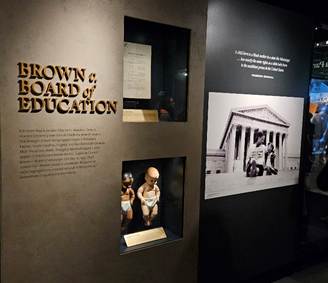
While in Washington, DC, for the Association for Psychological Science annual convention, I took an afternoon to visit the National Museum of African American History and Culture. I was especially interested in seeing the exhibit on Brown v. Board of Education which features the Mamie Phipps Clark doll study (Concourse C, Level 2: “Defending Freedom, Defining Freedom, 1876-1968”)–and it was her study. In a later interview, Kenneth Clark said, “the record should show [it] was Mamie’s primary project that I crashed. I sort of piggybacked on it” (Rothberg, 2022). While what is here at the museum is largely—but not entirely—accurate, I’m sorry that they didn’tRead More →

people in a concert

My wife and I took a cruise in 2024. On the last evening, several members of the crew put on a show. Groups of crew members who shared a home country performed popular national dances. This got me thinking about whether the United States had something that could be considered a national dance. If you’d like, take a few minutes to discuss. Does the U.S. have something that could be a national dance? Years ago, we had a friend who visited India. The group she was visiting showed her how to do one of their national dances. Afterwards, they asked her to teach her aRead More →