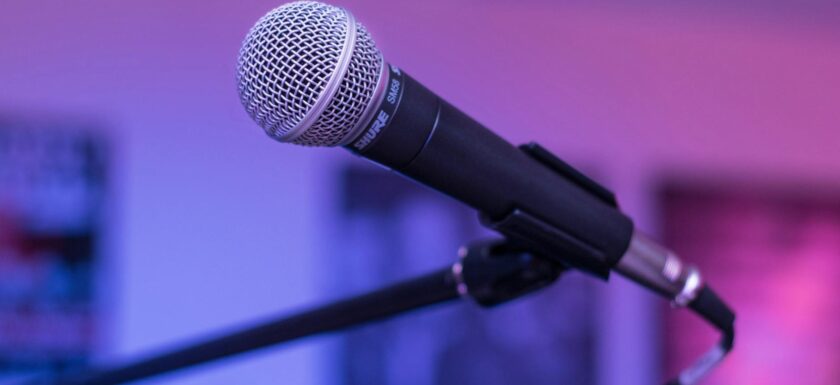
shallow focus photography of black microphone

During the COVID lockdown, Yale psychological scientist Brian Scholl “found himself reacting unexpectedly to two of his colleagues. One was a close collaborator with whom Scholl usually saw eye to eye, and the other was someone whose opinions tended to differ from his own. On that particular day, though, he found himself siding with the latter colleague” (Nuwer, 2025, p. 18). After the meeting, it occurred to Scholl that his close collaborator “had been using the junky built-in microphone of an old laptop, whereas the one with whom he typically disagreed had called in from a professional-grade home-recording studio” (Nuwer, 2025, p. 18). Could audioRead More →

person going up the stairs

This is the fourth in a series of posts based on Becca Levy’s book Breaking the age code: How your beliefs about aging determine how long & well you live. **** In my last post, I wrote about how beliefs about aging can affect memory now and even a whopping 38 years later. Researchers have found similar results for physical functioning. Becca Levy and  colleagues “found that those with more positive self-perceptions of aging in 1975 reported better functional health from 1977 to 1995, when we controlled for baseline measures of functional health, self-rated health, age, gender, race, and socioeconomic status” (B. R. Levy etRead More →

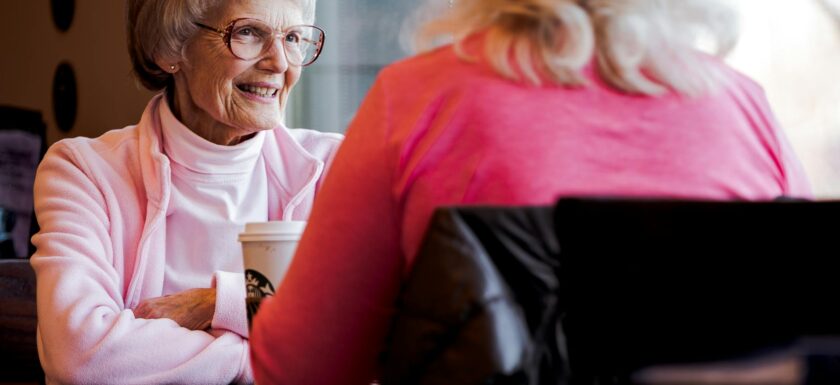
photo of old woman sitting while talking with another woman

This is the second in a series of posts based on Becca Levy’s book Breaking the age code: How your beliefs about aging determine how long & well you live. ******* Psychological scientist Becca Levy’s stereotype embodiment theory “proposes that negative age beliefs bring about detrimental health effects that are often, and misleadingly, characterized as the inevitable consequences of aging. At the same time, positive age beliefs do the exact opposite; they benefit our health” (Levy, 2022, p. 15). Reread the above paragraph. The societal messages that tell us about the horrors of aging are slowly killing us. You’ll be unsurprised to hear that weRead More →

smiling man and woman wearing jackets

I’ve been thinking a lot lately about aging. Several years ago, I had a friend in her 80s tell me that internally she didn’t feel any different than she did when she was in her 40s. While I’m gaining distance from my 40s but still quite a ways away from my 80s, I understand what she was telling me. I feel no different today than I did when I was in my 40s, and I don’t see that changing. What I do see changing is how others interact with the me that they I assume I am. My wife read Becca Levy’s 2022 book BreakingRead More →

Exhibit on Brown v. Board of Education

While in Washington, DC, for the Association for Psychological Science annual convention, I took an afternoon to visit the National Museum of African American History and Culture. I was especially interested in seeing the exhibit on Brown v. Board of Education which features the Mamie Phipps Clark doll study (Concourse C, Level 2: “Defending Freedom, Defining Freedom, 1876-1968”)–and it was her study. In a later interview, Kenneth Clark said, “the record should show [it] was Mamie’s primary project that I crashed. I sort of piggybacked on it” (Rothberg, 2022). While what is here at the museum is largely—but not entirely—accurate, I’m sorry that they didn’tRead More →

red white and black labeled box

Unnamed researchers at the University of Zurich created 34 false Reddit accounts that represented diverse demographics, such as “a male rape survivor, a trauma counselor, and a Black person who disagreed with the Black Lives Matter movement” (O’Grady, 2025, p. 570). From these accounts, the researchers posted AI-generated content in the changemyview subreddit. Their hypothesis was that if AI used information about the person who originally posted their point of view, AI could create a more persuasive argument. After 1,500 posts over four months, the researchers reported that their AI-generated posts resulted in more deltas, which are what readers give for posts that were influentialRead More →

Regardless of which side of the political divide you or your students stand on, here is a real-world example of cognitive dissonance. “[F]rom 2012-2023, about half of all new [electric vehicle] registrations in the U.S. went to the 10% most Democratic counties” (Davis et al., 2025, p. 1). However, an early 2025 poll found that only 12% of Democrats have a favorable opinion of Elon Musk (Kiley & Asheer, 2025), the owner of Tesla, Inc. Those data make it unsurprising that Tesla sales are in down in states that lean politically toward Democrats, such as California (Sriram, 2025). If the politics of a company’s ownerRead More →

The National Institute on the Teaching of Psychology (NITOP) is later this week. I’ve previously written (Frantz, 2023): I’ll confess that well before I retired my primary purpose for attending conferences was to meet with my friends and make new friends. In SPQR: A History of Ancient Rome, the author and Roman historian Mary Beard tells us that Polybius (200 BCE – 118 BCE) supposedly advised a young man, “Never come back from the Forum…until you have made at least one new friend” (Beard, 2016, p. 184) I was reminded of this recently when I read the (freely available) Working Life essay at the endRead More →

people in a concert

My wife and I took a cruise in 2024. On the last evening, several members of the crew put on a show. Groups of crew members who shared a home country performed popular national dances. This got me thinking about whether the United States had something that could be considered a national dance. If you’d like, take a few minutes to discuss. Does the U.S. have something that could be a national dance? Years ago, we had a friend who visited India. The group she was visiting showed her how to do one of their national dances. Afterwards, they asked her to teach her aRead More →

Breakfast Bagel

I enjoy a good bagel, and I enjoy a news story that promises to illustrate several social psychological principles. When the headline reads “The Hole in This Bagel Shop’s Business Model? It’s Too Popular” (Balk, 2024), I’m in. Apollo Bagels in New York City’s West village has become so popular that the lines stretch to 100 feet. And that was before the November 30, 2024 New York Times story. After covering the social psychology chapter in Intro Psych, ask your students to read the story (the link is gifted to you, so your students do not need a New York Times account). And, then, asRead More →